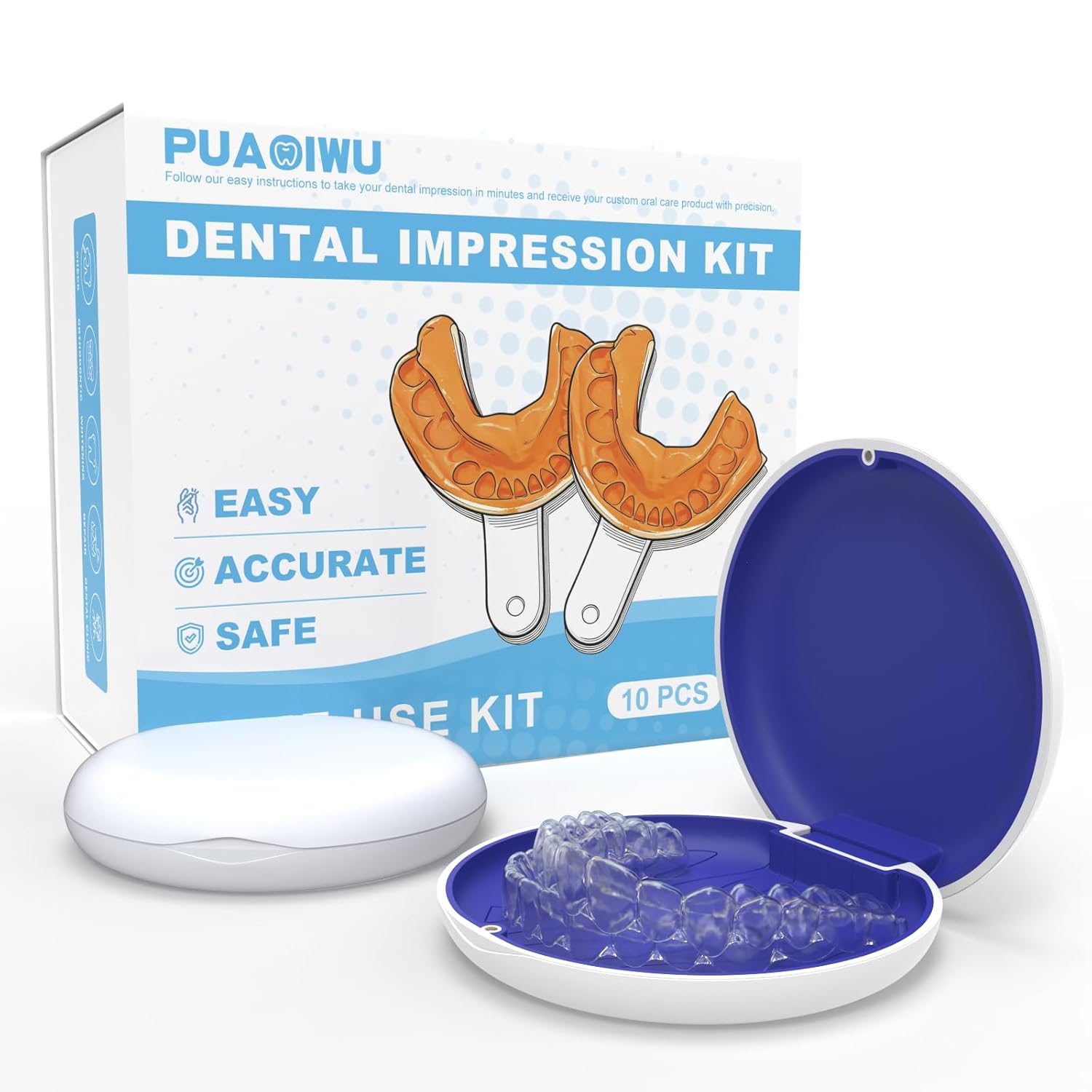
Custom Retainer for Teeth, Clear Invisible Mouth Retainer – 1.0 mm/1.5 mm Thickness, BPA‑Free Comfortable & Durable
My dentist told me my teeth had shifted. Not dramatically — just enough that she noticed, and then I noticed too, once she pointed it out. This was about eight months after I'd quietly stopped wearing the retainer from my orthodontic treatment. I hadn't made a deliberate decision to quit. I'd just gotten lazy about it, and then I forgot I was supposed to be doing it at all.
If you've had braces or aligners, this probably sounds familiar. The treatment finishes, you get handed a retainer, and life absorbs it. You skip a night. Then a few nights. Then you've gone two months without touching it and you've somehow convinced yourself it's probably fine.
It's not always fine. My teeth are proof of that.
---
I've been using a custom clear retainer since then — BPA-free, 1.5 mm thickness — and I want to write honestly about what that experience has actually been like. Not the polished version. The part where it takes three weeks to stop noticing you're wearing it, and also the part where it's now genuinely just a thing in my life that I don't think about much anymore.
**The thickness question**
This confused me at first. 1.0 mm or 1.5 mm doesn't sound like a significant difference, but it does affect how you'll use the retainer in practice.
The 1.0 mm version is thinner and more comfortable for daytime wear. It sits closer to your teeth, affects your speech less, and is less noticeable. If you're working in a role where you talk a lot, or you just want something you can wear during the day without it being a whole thing, this is probably the one.
The 1.5 mm version is stiffer. It holds its shape better over time, and it handles nightly use more reliably. If you grind your teeth even a little — and I do, apparently — the extra rigidity gives it more durability and gives your teeth a bit more protection. It took me maybe two weeks to stop noticing the bulk at night. Now I don't think about it.
Neither option is objectively better. It depends on when you wear it and what your mouth does while you sleep.
**About the BPA-free material**
I'll admit I initially skimmed past "BPA-free" on the product listing, the way you skim past nutrition labels when you've already decided to buy the thing. But it's worth pausing on. BPA is a synthetic compound found in certain plastics that can leach over time — particularly with repeated heat exposure. When you're wearing a retainer for six or seven hours overnight, that contact adds up across months and years. The research on low-level BPA exposure isn't settled, but I don't need certainty to prefer the version that doesn't have it. The thermoplastic used in BPA-free retainers performs the same way; there's no functional trade-off.
**Why custom fit matters**
Pharmacy retainers — the boil-and-bite kind — work by softening in hot water and roughly conforming to your teeth. They're inexpensive. They're also not very precise. The fit is loose enough that they don't hold tooth positions the way a proper retainer does, and the bulk makes them uncomfortable for most people to wear consistently.
A custom retainer is made from an impression of your actual teeth — either through a dentist or an at-home kit, depending on the provider. The resulting fit is exact. That exactness is what does the maintenance work. A retainer that doesn't fit well doesn't do much.
**Living with it day to day**
Clear retainers are genuinely discreet. Once you've worn yours for a couple of weeks and the initial adjustment is done, it's mostly invisible to other people and mostly unnoticeable to you. Speech is affected for the first few days — you'll sound slightly different to yourself — and then it normalizes.
Cleaning is simple enough: a soft toothbrush, mild dish soap, and cold water handle daily maintenance. Hot water is the main thing to avoid. It warps the plastic. I learned this by rinsing mine under warm tap water by accident and spending twenty minutes wondering why it felt different. Get retainer cleaning tablets for the weekly deeper clean — they work better than soap for preventing the gradual discoloration that builds up over months.
The other thing: keep it in a case when it's not in your mouth. This should be obvious, but apparently I had to learn it twice.
**Lifespan**
With consistent cleaning and care, a 1.5 mm retainer typically holds up through two to three years of nightly use. A 1.0 mm one wears down faster with daily wear, so factor that into whatever comparison you're making on price. Some providers offer replacement pairs, which is worth asking about before you commit.
**What most people don't tell you going in**
Orthodontists increasingly tell patients to wear retainers indefinitely. This can sound alarmist, but it's accurate. Teeth continue to shift through adulthood — not because anything went wrong with your treatment, but because that's what teeth do. The retainer is maintenance, not a temporary measure.
Once that clicked for me, the whole thing felt less like a burden. It's just something I do now, like brushing. The retainer sits on my nightstand in its case, goes in before I sleep, comes out in the morning. On most days, it doesn't register at all.
That's probably the best you can say about a dental appliance: eventually, you stop thinking about it.