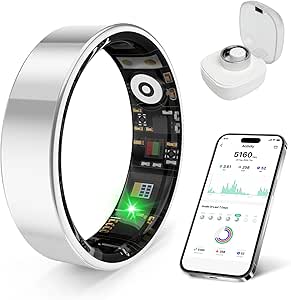
Smart Health Ring, Featuring Stress and Sleep Monitoring Functions, Compatible with iOS and Android,Waterproof Fitness Tracker for Women & Men, No Subscription Fee. (Silver, 9)
I used to think sleep tracking meant wearing something chunky on your wrist that left a tan line and needed charging every two days. Then I tried a smart ring — silver, size 9 — and I haven't looked at my fitness watch for health data since.
This isn't a glowing endorsement. More of a "here's what it actually does, here's where it gets murky" account from someone who wore it through a full month.
---
## What you're getting
No screen. No notifications vibrating against your finger at 2pm. No monthly subscription quietly billing you while you forget to cancel. It tracks sleep, stress, heart rate, blood oxygen, steps, and calories. Syncs with iOS and Android. Waterproof for showers and dishes — IPX8-rated, which should handle most real-life situations short of scuba diving.
The silver colorway reads more like a wedding band than a fitness device. On a size 9, most people won't notice it unless you tell them. That's the design goal, and it works.
---
## Sleep tracking is where it earned its keep
The ring breaks sleep into light, deep, and REM stages. After week one, a pattern showed up I'd been vaguely suspecting but ignoring: decent total sleep time, almost no deep sleep. Averaging 45-55 minutes of deep sleep when most guidance suggests closer to 90.
I want to be clear about what "accurate" means here. Consumer rings measure heart rate variability and movement — not brain waves. So the absolute numbers aren't clinical-grade. But the *consistency* across nights was enough to be actionable. Same pattern, night after night. I cut screen time in the last hour before bed. Two weeks later, deep sleep was averaging around 75 minutes.
Whether those specific numbers are "right" in some objective sense, I genuinely can't say. But they tracked something that changed when I changed my behavior, and that's about all I ask of any measurement.
---
## Stress monitoring: useful in aggregate, unreliable day-to-day
The ring uses HRV readings throughout the day and converts them into a stress score. My experience: it's a reasonable broad-brush indicator and a pretty poor moment-to-moment one.
The day I had back-to-back meetings, a deadline collision, and skipped lunch — the ring flagged it as high stress. My slow Saturday with a book and no plans: low stress. Those passes. It's the middle range where things get vague. There were moderate-stress readings on days I felt completely calm, and low readings on days I definitely wasn't.
I stopped expecting it to tell me how I'm feeling and started using it to look at weekly trends instead. That's a reasonable way to use it. Just don't expect it to read a specific Tuesday accurately.
---
## The no-subscription thing matters more than it sounds
The wearable industry has quietly moved into recurring-charge territory. One popular platform now gates full access to its own app's core features behind a monthly fee. This ring gives you everything in the companion app for free — sleep staging, HRV history, activity data — without anything recurring to cancel or forget about.
The app itself is functional, not polished. Charts are readable. Sleep breakdown is clear. The stress timeline gets a bit cluttered when you try to read it quickly. There's no coaching, no recommendations, no hand-holding — just your data. If you want someone to tell you what to do with the numbers, you'll need to figure that out yourself.
---
## Sizing: don't skip the kit
Ring sizing matters more than it did with my watch. I had to exchange once before landing on the right fit. Too loose and the sensors don't read well; too tight and by evening it's uncomfortable. Use the sizing kit if you're between sizes. The cost of getting it wrong is more annoying than expensive, but still.
Battery runs 5-7 days depending on usage. Charges in about 90 minutes. The charger is proprietary, which is the one design choice I keep wishing they'd reconsidered. One more cable to track.
The app occasionally delays syncing your sleep data in the morning — it usually catches up within a few minutes, but it's happened enough that I mention it.
---
## Who this fits
It makes the most sense for people who already like their watch and don't want to replace it, people who want passive health data without a screen on their wrist, and people who specifically want sleep and stress information without paying monthly for it.
It's less suited for serious workout tracking — no GPS, no workout modes worth bragging about. If you need navigation data or detailed fitness metrics on a run, you'll want something else for that.
After 30 days, I still put it on every morning. The sleep data pushed me to make one actual behavioral change. That's more than most gadgets have managed.