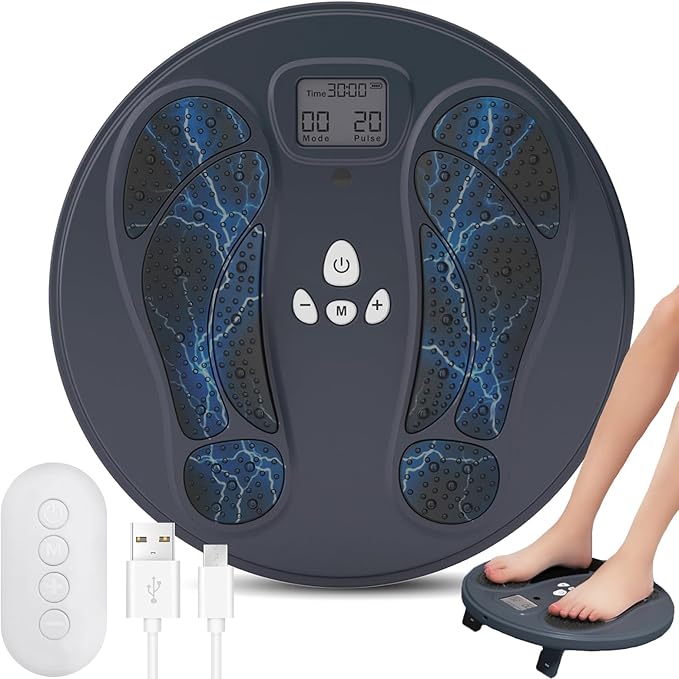
1.FDA Cleared - Electronic Muscle
My dad has had neuropathy for about six years. It started in his toes — that pins-and-needles sensation that just doesn't quit — and worked its way through his feet and into his calves. He's cycled through creams, compression socks, a stretch of physical therapy. Some things helped a little. Most helped barely at all.
So when I kept seeing this EMS/TENS foot massager pop up on gift guides for parents and older adults, I bought one. Tested it on myself first. Then passed it to him.
Three months in. Here's what we actually found.
---
## What This Thing Actually Does
EMS is Electrical Muscle Stimulation — mild pulses that make your muscles contract involuntarily. TENS (Transcutaneous Electrical Nerve Stimulation) targets nerves rather than muscles, with the idea being that it disrupts pain signals before they get to your brain. This device does both.
The FDA clearance is worth noting because it's not marketing language. It means the device went through regulatory review for safety and intended use. That puts it in different territory than the average $40 wellness gadget with vague claims on the packaging.
You place your feet on the pad, sit back, and the stimulation works through the soles of your feet — which happen to be packed with nerve endings. Some versions also include electrode pads with wires you can attach to your calves and legs.
---
## My Dad's Results (Neuropathy, Circulation)
He's 71 and not someone who gets excited about gadgets. He used it most evenings, about 20 minutes, intensity around 7 out of 20.
After a week, he mentioned his feet felt "less heavy" in the mornings. After three weeks, the pins-and-needles were still there but less sharp in the hours after a session. He started reaching for the device without me prompting him, which — honestly — was more convincing than anything he said out loud.
One thing surprised both of us: his feet were warmer after sessions. He has chronic cold feet, a circulation thing. The device doesn't produce heat, but EMS-triggered muscle contractions push blood through vessels. That effect is real and well-documented; hospitals use it for post-surgical patients who can't walk. For home use, the version of it is milder, but it showed up.
He doesn't think it's a cure. Neither do I. But he still has it on his nightstand.
---
## My Experience (Post-Run Soreness)
I used the calf electrode pads after long runs. Intensity around 10 to 12 felt like a firm, involuntary contraction — not painful, just odd the first few times. After 15 minutes, the heavy-leg feeling had backed off enough that I noticed.
I've used those expensive compression recovery boots. This isn't that experience. But for what it costs, the effect was real enough that I kept using it past the "testing it for the review" phase.
---
## The Annoying Parts
The controls are small. If you're buying this for an elderly parent — particularly one with limited dexterity or vision — the button layout takes getting used to. My dad needed help the first couple of sessions.
The intensity jumps aren't smooth. Going from level 5 to 8 is a real leap, and someone new to EMS who doesn't know to go slowly might turn it up fast and find the whole experience unpleasant. Worth warning whoever you're giving it to.
The leg electrode pads wear out over time. You can replace them, but it's an ongoing cost that doesn't always get mentioned at purchase.
And the power cord. It's short. Not unusably short, but if your chair isn't near an outlet, you'll need an extension.
---
## On the Circulation Claims
Mostly fair, with some context.
EMS contractions do mechanically move blood through vessels — that's not a marketing claim, it's basic physiology. The clinical evidence for TENS as a neuropathy pain treatment is more uneven. Some studies show meaningful improvements in pain scores, others find minimal effect. The relief seems to be temporary and needs to be kept up regularly. It's not fixing whatever is causing the neuropathy or circulation problem.
For my dad, it's one thing in a rotation that includes actual walking, staying hydrated, and managing his diabetes. On its own, it probably wouldn't do much.
---
## Is It Worth Buying as a Gift
For a parent with neuropathy or circulation issues: probably. The foot pad setup is genuinely easy to use — you sit down, put your feet on it, done. No gel to apply, no complicated positioning. 20 minutes in a chair is a realistic ask for someone who's skeptical of new devices.
Just be upfront about what it does. Temporary relief, possible circulation improvement, no reversal of nerve damage. If you frame it as a cure and it doesn't work that way, the thing ends up in a closet.
For someone who runs or works on their feet: the calf pads make it a decent recovery tool. Different reason to use it, same device.
---
## Where I Land
My dad still uses it most evenings. I still use it after long runs. Neither of us would use the word "life-changing." But we both kept picking it up after the initial novelty wore off, which is usually the honest measure.
The FDA clearance is real. The discomfort relief is real but doesn't last forever. The controls are harder than they need to be for older users. The cord is too short.
If you're looking for something to give a parent that has a real shot of getting used rather than shelved — this has better odds than most things in its price range.